Saturday, 28 December 2013

Beautiful Flowers Wallpapers Garden Images Pictures in the World Roses And Butterflies Wallpapers for Desktop Background

Beautiful Flowers Pictures

Source(google.com.pk)

On a table in Harvard University’s herbarium, six slimy-looking brownish lobes, each roughly the size of your palm, float in a tub of ethanol solution. They’ve been sliced in half and their flat sides face the ceiling, revealing strange patterns of grooves, bumps and tentacle-like projections. If you had to guess, you might say
they were sections of something that grew in the deep ocean.

In fact, they’re pickled flower buds. And though their drab hues and soggy miens suggest otherwise, they’d have bloomed, if left in their rainforest homes, into some of nature’s largest, weirdest and worst-smelling flowers. The plants, which graduate student Lachezar Nikolov collected in the jungles of Malaysia and Thailand, belong to the genus Rafflesia. Their bright red and yellow flowers can grow up to 3 feet in diameter and weigh more than 15 pounds. But unlike most plants, Rafflesia possess no leaves, roots or stems. They don’t even practice photosynthesis, the basic method of energy-making common to nearly all plants. Instead they bloom from within another species, stealing nutrients from massive vines that are members of the grapevine family. Rafflesia are enormous parasites.

Add in the fact that they emanate the smell of rotting flesh, and it’s no wonder Rafflesia, known as corpse flowers, have captivated naturalists for more than two centuries. Yet these rare organisms are only just beginning to reveal their secrets. Because Rafflesia are so incredibly unusual, scientists have only recently figured out where they came from — which ancestral plants ultimately morphed into these biological curiosities. "There are so many fundamental questions," says Nikolov.
But in the lab of Nikolov’s adviser, Charles Davis, provocative facts about Rafflesia evolution are starting to pile up, and they could prove useful in a range of fields, from the biology of scent to parasitology
A Rafflesiaceae bud is cracked open in the Harvard lab of graduate student Lachezar Nikolov.
Lachezar Nikolov

Evolutionary Mystery

The first time Davis saw a Rafflesia flower blooming in a Malaysian rainforest, he couldn’t believe it was real. It was a sweltering day in northern Borneo in 1995 and Davis, then an undergraduate, was collecting plants at the foot of Mount Kinabalu. He’d been studying plant diversity, and this flower, curiously emerging from a twisted thicket of vines, seemed to defy all rules. Davis was transfixed. "It was warty like a toad, smelled like a dead animal, felt wet like a sponge," he recalls. "It was just so totally strange and otherworldly to me."

Davis was hardly the first to succumb to the lure of the corpse flower (not to be confused with Amorphophallus titanum, which has a giant phallic protrusion and also happens to smell like rancid meat and bear the nickname corpse flower). In 1818, naval surgeon and naturalist Joseph Arnold, one of the first Europeans to collect a Rafflesia, called it "the greatest prodigy of the vegetable world."

The mystery of this bizarre flower only deepened over the decades that followed, as a succession of biologists was drawn to it but unable to classify it, or the dozen or so other species of the family Rafflesiaceae they discovered in the forests of Southeast Asia, all lurid and stinking of decay.

Davis returned to his undergraduate studies, but he never forgot the flower he’d seen. A decade later, as a postdoctoral researcher, he was working on a multi-university collaboration called the Tree of Life, to piece together the phylogeny — that branching tree of evolutionary history — for all flowering plants.
 
The puzzle, known as "Darwin’s abominable mystery," was to figure out how a quarter-million-plus species of flowering plants came, in a very short span of evolutionary time, to dominate the Earth
A fly, and pollinator, is attracted to the mottled flesh tones and rancid smell of a Rafflesia flower.

Lachezar Nikolov

Davis’ section of the puzzle was a large order of around 20,000 plants called Malpighiales, which first appeared more than a hundred million years ago and quickly diversified to include a large percentage of the planet’s tropical forest diversity.

In 2004, a group of researchers made an important discovery as they compared the genetic makeup and mitochondrial DNA (one of three types of DNA in plants, but the one that researchers had tended to ignore because it evolves relatively slowly) of Rafflesiaceae species to known Malpighiales: It turns out that the Rafflesiaceae family is part of Malpighiales. Up until then, it had been anyone’s guess where these bizarre parasitic plants came from. Suddenly, the flower that had captivated Davis that steamy day on the island of Borneo was officially part of his funded research agenda. He pounced.

From the DNA, Davis teased out more details on the plant’s origins. He discovered that Rafflesia evolved from plants with some of the world’s smallest flowers, whose blossom size ballooned nearly eightyfold over 46 million years. For scale, if a common white Shasta daisy grew 80 times bigger, its petals would stretch the length of a shipping container. "It makes the plants that much more mysterious," says Davis. "What drove the evolution of these ginormous flowers?"
Beautiful Flowers Pictures


Beautiful Flowers Wallpapers Garden Images Pictures in the World Roses And Butterflies Wallpapers for Desktop Background

Beautiful Flower Wallpaper

Source(google.com.pk)
I used to dread the arrival of cold weather, knowing that a frost would put an end to the time I spent outdoors coddling my flowers. But I’ve gotten over that. Now, instead of mourning the climatic change, I sit by the applewood fire, sip hot cocoa, and devote the time I used to spend tending my garden to thinking of imaginative ways to use all of the flowers I’ve pressed.

Drying flowers in a press is a simple operation. In fact, when I decided that I wanted to press my flowers, I didn’t even own a flower press. A frost was coming and I had to move quickly, so I hastily picked a basketful of blossoms, arranged them on sheets of paper, and stuck them into a heavy textbook that I weighted with a cinder block. Weeks later, my purple and yellow pansies were still colorful, just as exquisite as they had been growing in the garden.

Harvest flowers when they’re dry

Harvest flowers on dry days. The author collects blooms early in the morning after the dew has dried or in the early evening before it returns.

The newest and freshest flowers are the only ones worth saving, so I allow myself to be choosy when harvesting them. Since I never know when I’ll come across one, I keep a small basket and a pair of scissors handy in the garden at all times. That way, when a flower worth saving does appear, I merely snip it and let it fall gently into my basket. And since the process of harvesting flowers is really a form of deadheading, the more flowers I pick, the more new flowers are created. That way, I can continue to harvest the flowers on some of my plants throughout the entire growing season.

The drier the flowers are, the better they will press, so the best time to harvest flowers for pressing is in the morning after the dew has dried or in the early evening before it returns. I never harvest flowers when it’s raining, and I like to give my flowers at least a day or two to dry out after an extended summer rain before picking them.

I get picked flowers into the press as soon as possible, before they start to wilt. There’s no need to run back to the house, but I wouldn’t retire to the hammock for a midday snooze either. Also, I keep my flowers, once picked, out of direct sunlight to keep them fresh.

Group similar flowers together

Sort fresh flowers by type, and arrange them face down, making sure that none of the blooms are touching. Sandwich the blooms between sheets of paper, which will absorb the flowers’ moisture during the drying process.

Once I’ve collected a batch of flowers, I sort them by type. I dry like flowers together because they dry at the same rate, and it also simplifies the labeling process. With my flowers sorted, I then arrange them, face down, on sheets of white paper. It’s important that none of the flowers touch; otherwise, when they dry, they will be stuck together.

I use sheets of smooth white typing paper to sandwich my blooms during the pressing process. The paper draws the moisture out of the petals, and also keeps the occasional problem blossom from sticking to the pages of the book I’m using or the cardboard layers of my flower press. I once made the mistake of using textured paper towels to layer my flowers, which resulted in dried flowers with the same texture. Now I use only smooth typing or blotter paper.
 
Beautiful Flower Wallpaper

Beautiful Flower Wallpaper

Beautiful Flower Wallpaper

Beautiful Flower Wallpaper

Beautiful Flower Wallpaper

Beautiful Flower Wallpaper


Beautiful Flowers Wallpapers Garden Images Pictures in the World Roses And Butterflies Wallpapers for Desktop Background

Beautiful Flowers Images

Source(google.com.pk)
 
Beautiful Flowers Wallpapers Garden Images Pictures in the World Roses And Butterflies Wallpapers for Desktop Background
 
Spring is like a perhaps hand," wrote the poet E. E. Cummings: "carefully / moving a perhaps / fraction of flower here placing / an inch of air there... / without breaking anything."
With the hand of nature trained on a beaker of chemical fluid, the most delicate flower structures have been formed in a Harvard laboratory—and not at the scale of inches, but microns.
These minuscule sculptures, curved and delicate, don't resemble the cubic or jagged forms normally associated with crystals, though that's what they are. Rather, fields of carnations and marigolds seem to bloom from the surface of a submerged glass slide, assembling themselves a molecule at a time.
By simply manipulating chemical gradients in a beaker of fluid, Wim L. Noorduin, a postdoctoral fellow at the (SEAS) and lead author of a paper appearing on the cover of the May 17 issue of Science, has found that he can control the growth behavior of these crystals to create precisely tailored structures.
"For at least 200 years, people have been intrigued by how complex shapes could have evolved in nature. This work helps to demonstrate what’s possible just through environmental, chemical changes," says Noorduin.
The precipitation of the crystals depends on a reaction of compounds that are diffusing through a liquid solution. The crystals grow toward or away from certain chemical gradients as the pH of the reaction shifts back and forth. The conditions of the reaction dictate whether the structure resembles broad, radiating leaves, a thin stem, or a rosette of petals.
It is not unusual for chemical gradients to influence growth in nature; for example, delicately curved marine shells form from calcium carbonate under water, and gradients of signaling molecules in a human embryo help set up the plan for the body. Similarly, Harvard biologist Howard Berg has shown that bacteria living in colonies can sense and react to plumes of chemicals from one another, which causes them to grow, as a colony, into intricate geometric patterns.
Replicating this type of effect in the laboratory was a matter of identifying a suitable chemical reaction and testing, again and again, how variables like the pH, temperature, and exposure to air might affect the nanoscale structures.
The project fits right in with the work of an expert in biologically inspired materials science, biomineralization, and self-assembly, and principal investigator for this research.
Aizenberg is the Amy Smith Berylson Professor of Materials Science at Harvard SEAS, Professor of Chemistry and Chemical Biology in the Harvard Department of Chemistry and Chemical Biology, and a Core Faculty Member of the Wyss Institute for Biologically Inspired Engineering at Harvard.
Her recent work has included the invention of an extremely slippery material, inspired by the pitcher plant, and the discovery of how bacteria use their flagella to cling to the surfaces of medical implants.
"Our approach is to study biological systems, to think what they can do that we can’t, and then to use these approaches to optimize existing technologies or create new ones," says Aizenberg. "Our vision really is to build as organisms do."
To create the flower structures, Noorduin and his colleagues dissolve barium chloride (a salt) and sodium silicate (also known as waterglass) into a beaker of water. Carbon dioxide from air naturally dissolves in the water, setting off a reaction which precipitates barium carbonate crystals. As a byproduct, it also lowers the pH of the solution immediately surrounding the crystals, which then triggers a reaction with the dissolved waterglass. This second reaction adds a layer of silica to the growing structures, uses up the acid from the solution, and allows the formation of barium carbonate crystals to continue.
"You can really collaborate with the self-assembly process," says Noorduin. "The precipitation happens spontaneously, but if you want to change something then you can just manipulate the conditions of the reaction and sculpt the forms while they're growing."
Increasing the concentration of carbon dioxide, for instance, helps to create 'broad-leafed' structures. Reversing the pH gradient at the right moment can create curved, ruffled structures.
Noorduin and his colleagues have grown the crystals on glass slides and metal blades; they've even grown a field of flowers in front of President Lincoln's seat on a one-cent coin.
"When you look through the electron microscope, it really feels a bit like you’re diving in the ocean, seeing huge fields of coral and sponges," describes Noorduin. "Sometimes I forget to take images because it's so nice to explore."
 
 
Beautiful Flowers Images

Beautiful Flowers Images

Beautiful Flowers Images

Beautiful Flowers Images

Beautiful Flowers Images

Beautiful Flowers Images

Beautiful Flowers Images

Beautiful Flowers Images

Beautiful Flowers Images

Beautiful Flowers Images

Beautiful Flowers Images


Beautiful Flowers Wallpapers Garden Images Pictures in the World Roses And Butterflies Wallpapers for Desktop Background

Most Beautiful Flowers

Source(google.com.pk)
 
Beautiful Flowers Wallpapers Garden Images Pictures in the World Roses And Butterflies Wallpapers for Desktop Background What type of water shoud you give to your plants that are indoors? The best water for indoor plants is rainwater.The trouble is that we do not always have the opportunity to collect it
Which type of ornamental garden have you thought about for this March? TPWL will give you some advice about preparing for spring.Take away all protection around geraniums and other flowering plant
Astromelia or alstroemeria - as it is known scientifically - or in South American culture as Flor Amancay itself is a beautiful flower of the high Andes Mountains of Peru is also named internationally as the Peruvian Lily. Astromelias are plants that reproduces only in favorable environments and although it is a long-lasting flower after being cut much care must be taken to preserve their beauty and their beautiful colors. Here we will offer some advice on how to maintain the beauty of astromelias: * Try to keep constanly in water or watered , Astromelia is a flower that needs a lot of water because it is dry Keep an eye on the growth of flower stalk Cut each stem at least an inch so that it has a chance to grow more quickly and easily. * Remove dead leaves left in the bottom of the flower bed. * When you put Astromelia flowers in a vase, try mixing water with a tablespoon of sugar and a small cup of soda.Camellias Camellias are flowering plants of the genus Camellia and family Theaceae. There are several hundred species, all native to tropical Asia. These shrubs, whose height ranges from 1 to 10 meters, are evergreen, that brings out their abundant flowering. The camellia flowers are single or double.The classification of types of modern roses can be very confusing because many modern roses have a lot to do with types of garden roses. Here are the most popular classifications of modern roses.
FAMOUS QUOTES ABOUT FLOWERS "Some people are always grumbling because roses have thorns. I am thankful that thorns have roses." - Alphonse Karr (French novelist ) "I'd rather have roses on my table than diamonds on my neck." -Emma Goldman (1869-1940) "Love is life.
The significance of flowers Gifts are personal expressions of our feelings for each other. People in most countries of the world consider flowers to be the best gift to express love.
Purple is dramatic, flamboyant and different. It's the colour most used among lawyers, clergymen and psychiatrists, and so it’s not a bad gift for them. White the colour of purity.
Lengthening the lifetime of your flowers or bouquetFor Floral arrangementsMake sure to leave all arrangements in a jar or vase that is filled to the brim with flower food obtained from your local florist.
THE LANGUAGE OF FLOWERS The famous Russian professor, Illya Shevelyov once said: "Flowers given by loving people will never fade." The meaning of these words is deeper than it may seem.With the hand of nature trained on a beaker of chemical fluid, the most delicate flower structures have been formed in a Harvard laboratory—and not at the scale of inches, but microns.
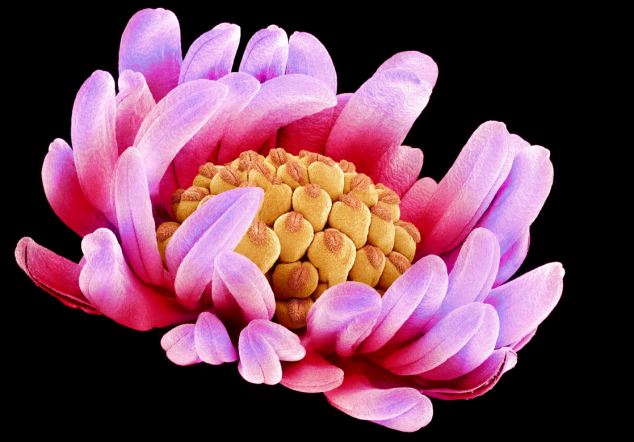
These minuscule sculptures, curved and delicate, don't resemble the cubic or jagged forms normally associated with crystals, though that's what they are. Rather, fields of carnations and marigolds seem to bloom from the surface of a submerged glass slide, assembling themselves a molecule at a time.
By simply manipulating chemical gradients in a beaker of fluid, Wim L. Noorduin, a postdoctoral fellow at the
 
Most Beautiful Flowers


Beautiful Flowers Wallpapers Garden Images Pictures in the World Roses And Butterflies Wallpapers for Desktop Background

Beautiful Flowers

Source(google.com.pk)
 
Spring is like a perhaps hand," wrote the poet E. E. Cummings: "carefully / moving a perhaps / fraction of flower here placing / an inch of air there... / without breaking anything." With the hand of nature trained on a beaker of chemical fluid, the most delicate flower structures have been formed in a Harvard laboratory -- and not at the scale of inches, but microns.
These minuscule sculptures, curved and delicate, don't resemble the cubic or jagged forms normally associated with crystals, though that's what they are. Rather, fields of carnations and marigolds seem to bloom from the surface of a submerged glass slide, assembling themselves a molecule at a time.
By simply manipulating chemical gradients in a beaker of fluid, Wim L. Noorduin, a postdoctoral fellow at the Harvard School of Engineering and Applied Sciences (SEAS) and lead author of a paper appearing on the cover of the May 17 issue of Science, has found that he can control the growth behavior of these crystals to create precisely tailored structures.
"For at least 200 years, people have been intrigued by how complex shapes could have evolved in nature. This work helps to demonstrate what's possible just through environmental, chemical changes," says Noorduin.
The precipitation of the crystals depends on a reaction of compounds that are diffusing through a liquid solution. The crystals grow toward or away from certain chemical gradients as the pH of the reaction shifts back and forth. The conditions of the reaction dictate whether the structure resembles broad, radiating leaves, a thin stem, or a rosette of petals.
It is not unusual for chemical gradients to influence growth in nature; for example, delicately curved marine shells form from calcium carbonate under water, and gradients of signaling molecules in a human embryo help set up the plan for the body. Similarly, Harvard biologist Howard Berg has shown that bacteria living in colonies can sense and react to plumes of chemicals from one another, which causes them to grow, as a colony, into intricate geometric patterns.
Replicating this type of effect in the laboratory was a matter of identifying a suitable chemical reaction and testing, again and again, how variables like the pH, temperature, and exposure to air might affect the nanoscale structures.
The project fits right in with the work of Joanna Aizenberg, an expert in biologically inspired materials science, biomineralization, and self-assembly, and principal investigator for this research.
Aizenberg is the Amy Smith Berylson Professor of Materials Science at Harvard SEAS, Professor of Chemistry and Chemical Biology in the Harvard Department of Chemistry and Chemical Biology, and a Core Faculty Member of the Wyss Institute for Biologically Inspired Engineering at Harvard.
Her recent work has included the invention of an extremely slippery material, inspired by the pitcher plant, and the discovery of how bacteria use their flagella to cling to the surfaces of medical implants.
"Our approach is to study biological systems, to think what they can do that we can't, and then to use these approaches to optimize existing technologies or create new ones," says Aizenberg. "Our vision really is to build as organisms do."
To create the flower structures, Noorduin and his colleagues dissolve barium chloride (a salt) and sodium silicate (also known as waterglass) into a beaker of water. Carbon dioxide from air naturally dissolves in the water, setting off a reaction which precipitates barium carbonate crystals. As a byproduct, it also lowers the pH of the solution immediately surrounding the crystals, which then triggers a reaction with the dissolved waterglass. This second reaction adds a layer of silica to the growing structures, uses up the acid from the solution, and allows the formation of barium carbonate crystals to continue.
"You can really collaborate with the self-assembly process," says Noorduin. "The precipitation happens spontaneously, but if you want to change something then you can just manipulate the conditions of the reaction and sculpt the forms while they're growing."
Increasing the concentration of carbon dioxide, for instance, helps to create 'broad-leafed' structures. Reversing the pH gradient at the right moment can create curved, ruffled structures.
Noorduin and his colleagues have grown the crystals on glass slides and metal blades; they've even grown a field of flowers in front of President Lincoln's seat on a one-cent coin.
"When you look through the electron microscope, it really feels a bit like you're diving in the ocean, seeing huge fields of coral and sponges," describes Noorduin. "Sometimes I forget to take images because it's so nice to explore."
In addition to her roles at Harvard SEAS, the Department of Chemistry and Chemical Biology, and the Wyss Institute, Joanna Aizenberg is Director of the Kavli Institute for Bionano Science and Technology at Harvard and Director of the Science Program at the Radcliffe Institute for Advanced Study.
Coauthors included Alison Grinthal, a research scientist at Harvard SEAS, and L. Mahadevan, who is the Lola England de Valpine Professor of Applied Mathematics at SEAS, Professor of Organismic and Evolutionary Biology and of Physics, and a Core Faculty Member at the Wyss Institute.
The project was supported by National Science Foundation grants to the Harvard Materials Research Science and Engineering Center (DMR-0820484) and the Harvard Center for Nanoscale Systems (ECS-0335765); and by the Netherlands Organization for Scientific Research.
 
Beautiful Flowers
Beautiful Flowers
Beautiful Flowers
Beautiful Flowers
Beautiful Flowers
Beautiful Flowers
Beautiful Flowers
Beautiful Flowers
Beautiful Flowers
Beautiful Flowers
Beautiful Flowers